
Video Games Revolutionizing Occupational Therapy: Dr. Rachel Proffitt's Insights on Innovation and Rehabilitation

The following interview was recorded for the Tomorrow, Today podcast, featuring guest Dr. Rachel Proffitt, an occupational therapist and researcher on the role of virtual reality in occupational therapy at the University of Missouri. We are meeting today to discuss her work in OT and video games.
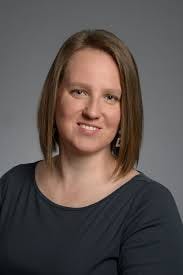
Nash Flynn:
So tell us a little bit about you. What drew you to OT and, specifically, what drew you to the recovery of those impacted by stroke and traumatic brain injuries?
Dr. Rachel Proffitt:
So I was originally headed for medical school. When I was an undergraduate, I knew I wanted to do something in healthcare, and I worked at a camp for individuals with disabilities, sort of a respite camp for, you know, caregivers and family members who just need to take a week or two off. And so we were then the caregivers for these individuals, both adults and children, and I loved it. I loved the interactions that I had, the friendships that I made with the campers and the staff there, and I realized that if I was going to go to med school, I wasn't going to have those interactions, and I really enjoyed working with individuals with a variety of disabilities.
And so I came back to undergrad and had to find a new career path, albeit a related one. I stumbled upon occupational therapy and realized it was a good fit for me, given my undergrad majors in biology and dance. So science, arts, you know, science and creativity, which is really what makes up occupational therapy. It's bringing the science in, then doing the problem-solving, being creative, and coming up with ways to help our clients live their lives to the fullest. And I'm really glad I went into this field.
And then, when I was in graduate school learning to become an OT, I started working in a research lab and working with individuals who had experienced a stroke, and hearing their stories and interacting with them was just so very powerful to me, and I wanted to do something. We were learning about a bunch of different interventions, ways to help them use their arms and legs and participate in daily life, and everything seemed so boring to me, and I said, well, I'm like there's got to be something, a way to do this to make it more fun.
And a woman from the computer science department this was at Washington University in St Louis, where I was going to grad school, university in St Louis, where I was going to grad school came to our lab and said, hey, I have these new approaches using pretty much off-the-shelf video games, but I want to do this for good, if you will, as she said. And I happened to be in the lab working that day, and I turned to my mentor, and I said, " Can I do this?”
This sounds like kind of that missing piece to what I want to do to work with and help these individuals who've had a stroke. And he said, sure, and so it kind of took off from there, and I realized I really liked the research side of it, being able to, you know, bring things then to clinical practice that are fun or exciting but still also have you know. I like doing clinical research. I like being able to interact with, you know, my study participants and hear how it impacts their daily lives. So that's kind of how I fell into this area, and it's evolved over time. I went from more of the development side to now going out and actually running the research studies, doing the testing, and now that things are more developed and ready to use.
Nash Flynn:
But it's been a really exciting journey and really excited to see where it goes from here for me, the reason I know OT is my daughter's autistic, so they use OT in a variety of settings for her and I was sort of surprised to run across it in this, you know, thinking about it like using it almost like a PT approach to get back some of those skills. It seems to me a wonderful thing about OT and PT, you know, speech therapy in general, that the practice settings, the populations, the diagnoses that you work with are so varied.
Dr. Rachel Proffitt:
You know, I have colleagues who would work with someone like your daughter. I have those who work in nursing homes. I have individuals who work in what we call work-hardening places for employees trying to get back to their job, individuals who work in psychiatric, you know, acute psychiatric mental health facilities. It really spans the gamut, and that's the one thing I love about OT: it is so diverse, and so this is one area I've chosen to build my career in, and it's individuals I've just found a real passion for helping.
Nash Flynn:
Yeah, that's wonderful. So your article that came out earlier this year was actually about the vigorous. So it focuses on the use of virtual gaming systems as a self-directed sort of physical therapy for these outpatient stroke victims. So is this something you were already thinking about before the COVID shutdowns, or is this practice a result of the sudden, necessary increase in telehealth appointments and working with these folks from home?
Dr. Rachel Proffitt:
So this has been ongoing for a number of years. This was the full study, which was conducted by my colleague, Lynn Gauthier, who was at the Ohio State University and is now at the University of Massachusetts Lowell. She was the principal investigator for the current position at the University of Massachusetts Lowell. She was the principal investigator for the study. It was a multi-site study, so she had investigators at different places around the country and was struggling with recruitment at one of the sites. So she reached out to me, knowing that I was in a similar field, you know, knew the research, knew the background, we had interacted at conferences prior to this, and said you know, hey, would you be able to recruit some participants? And I said, yeah, I think so.
We have a good relationship with our neurological clinics here. We have a registry of individuals who have experienced a stroke that we can reach out to, and you know, personally, I want to see this kind of stuff be successful. So I said sure, and this was in 2018 or 2019. So, pre-COVID, we actually wrapped up, I believe, in December 2019. So just a few months before everything started shutting down, which I'm very grateful for. So we were able to recruit people without having to deal with, you know, scheduling issues, what have you?
And so the telehealth piece of it had, you know, she had, I think she had the forethought to bring this in, and it's something that I, you know. I thought, well, yeah, this is going to work, especially given that, you know, here in Missouri, I'm in Columbia, Missouri, and so we're kind of like the center of the state. We serve up to a two-hour radius away from the city, because we are the closest thing for a lot of people living in our rural areas, and I recognized this when she reached out to me that this could potentially have a really nice impact on those who are limited in terms of their access to services.
You know they'll take a whole day to come into Columbia just to receive health care, and so that's, you know, time spent away from work, caregiver time spent away from work, driving. You know, travel is the fact that they may have one appointment at 9 am, then another at noon, so they're just sitting and waiting.
So doing something like telehealth, I think, can address a lot of those access barriers. That being said, rural Missouri does have its challenges in terms of internet availability, like a lot of the rural areas of our country, but it's getting better. And even having a phone-based telehealth visit is better than requiring them to drive to you, you know, come to a visit. That could be done over the phone. There are some things you want to see in person and, you know, assess, but a lot of what we do can be done over the phone.
So, yes, we were thinking about this before COVID. So, yes, we were thinking about this before COVID, and I think COVID has kind of accelerated the need for things like this in individuals, post-stroke, as well as many other diagnoses, and we saw that, oh, this is something that really can be useful and helpful. It's lower costs, it's less of a burden on the individuals that we serve, on their caregivers, less of a burden on the individuals that we serve on their caregivers.
You know, I think that you know yourself as a, as a parent, the time that you then have to spend organizing and coordinating and you know going then to visits and driving, you know organizing childcare, all of that to be able to just hop on a quick video conference wherever you are. It's a whole lot easier, and for many individuals post-stroke, they don't, can't, or won't drive, so they're relying on someone else to do that. It was kind of fortuitous that we even started exploring this before COVID, and you know, we saw some great results from that, particularly from the arm that included telehealth.
Nash Flynn:
I imagine that the feeling for you guys in March of 2020 was like, "Thank God”. Now, you know, we can just start applying it unilaterally, which is definitely what you want in a pandemic.
Dr. Rachel Proffitt:
Yes, I, you know I had a number of my other projects. You know we had to halt study recruitment, and you know any in-person interactions that were part of the research study, and then you know, kind of bring those back in. It was probably about June or July when things, at least here in the middle of the country, started opening up a little bit more.
I've heard from some of my colleagues who are in more metropolitan areas on the coast that it is still a challenge for them. So having an approach like this with a telehealth component allows us to recruit and include individuals in our research studies, rather than those who require in-person visits.
Nash Flynn:
Right, can you talk a little bit about the science itself in very layman's terms, because I'm not a scientist and you will lose me immediately, but just about how the study was done, sort of what you were looking for if any of the results surprised you at all, sure, so like I said, this study was something that had come from a couple of, I'd say, several years worth of research on my colleague's part, and then she pulled me into this.
Dr. Rachel Proffitt:
So, really, her goal was to explore a video game-based approach to stroke rehabilitation for individuals. Post-stroke or at least over 60% have difficulty using their more effective arm in everyday tasks, like they struggle to reach forward to open up a doorknob or, you know, pull up in their fridge to get a snack out, or make a cup of coffee. You know, all those things that we take for granted in our everyday lives.
They may struggle with this because, if this is the type of stroke they experience, it impacts the movement on one side of their body, called hemiparesis. It can affect the arm and the leg, just the leg, just the arm, and there are also other effects from other types affecting speech, memory, attention, those things we focus more on the motor-based effects, so the ability to use the arm and then the leg in everyday life.
And so there's an approach that has been studied over the past several years called constraint-induced movement therapy, or CIMT, and the goal with that one is that you constrain your more or less good side, so the side that was not affected by the stroke. Because most people, if you, you know, we're going to find the most as humans, we're going to find the most efficient way to do something, and so if one side of your body doesn't work as well, you're going to use the side that works a lot better to accomplish the task. It's lower frustration; it's just easier to do right.
But with constraint-induced movement therapy, you then constrain that good side that has been doing everything and essentially force the individual to use their more effective side. After a stroke. It can be really challenging and really frustrating for a lot of people because that side has not worked as well after their stroke. But by doing that sort of, you know, high intensity movement, making them use that side and even just little fine motor tasks, having them incorporate that into their everyday routine.
So saying, hey, when you go to turn all your light switches on and off in your house, at the end of the day, use your more effective side. And sometimes we even put a mitt over their hand to kind of restrict them from using that side, and say, all right, you can try using your arm to pull open that cabinet and flush the toilet. You know, trying to see if you can pick up the dog food bowl with your more effective side, and, you know, then in the clinic we do lots of repetitive tasks to get them to do. You know, get better at using that side. So there's a lot of good evidence to support that approach.
What the video game does is essentially the same sort of approach, but without using the real world objects. You're now playing a video game, so the game makes you use your less affected side to navigate this little sort of kayak or canoe down a rapid, so the game is called Recovery Rapids. So you use your arm to paddle and scoop up floating debris in the water. So you're helping the environment, batting away spiders and bats that fly over you, using your arm, moving it left and right to steer.
But rather than you know thinking about picking up these, you know little beans or whatever in the clinic, 20 times you're playing a game, and so now your focus is no longer on you using your arm, but on are you playing the game successfully? It's a lot more fun, but you're still getting that high-intensity, high-repetition number of movements and forcing the individual to use that arm. We use the connect sensor so it can say we can tell it, only the right arm is the one that's able to control the game, and that's their more effective side. If they try to use their better side, it won't work. So it's a natural constraint through playing the game.
And so that's the game Dr. Gauthier created, and she wanted to see if it would lead to improvement. So in science, if we were to just have everybody play the game and everybody got better, people would go well, was it because of the game or was it because everybody just naturally got better? You know, did everybody have? Were there other things in their life that we call confounders that impacted the results of that? So in science, what you have to do is compare what you want to see. Do you know, does it help people get better at other things that are comparable?
So we're now comparing the video game to the standard constraint induced movement therapy. Again, both use the same approach. You're forcing the individual to use that arm. It's just one's in person and one's a video game. So now we can say both groups get better. It's likely because that approach just works overall, even if the video game group outperforms the constraint-induced movement therapy group. We can say yes, because it is the approach and because the video games are likely more fun, more engaging, all of that, which is a little bit of what we saw in our findings.
We added a couple of other study arms in here. So we compare the video game, the standard constraint, and use movement therapy. We then had a video game with added telehealth sessions. We realized that just having the individual play the game relied on them making their own schedule and being consistent with playing the game.
I mean, I'm a person who, when I've done, I've done some physical therapy in the past. I haven't always been the most consistent in following my exercise programs, and a lot of people aren't, and we know this as therapists. So, adding in the telehealth calls had these additional check-ins with a therapist to say, hey, how's it going? You know, they could see how much the individual was playing the game. They could then say, "Here are some things to think about doing in your everyday life. Now that your arm is starting to get a little bit better, you know, do some problem-solving and some strategy training with.”
And so that was the little plus piece to one of the other study arms, and then our fourth comparison arm. We had four study arms here. The last one was just standard occupational therapy. We call sort of standard occupational therapy. Unfortunately, many individuals, in terms of healthcare coverage, get only one or two visits a week, typically for eight to 10 weeks. Medicare, I believe, covers up to about 26 visits a year. If you are in outpatient therapy, if you've had a stroke, that's it. Wow, and it's not a lot, no. And so that was our fourth time comparison base, basically to compare to what a standard care looked like.
Some places are starting to incorporate the constraint to just movement therapy, but most of it's just one hour a week, and you know that's it. Honestly, during that hour, most of what we're trying to do is talk them through it. You know how it's going, how are you using your arm, giving them some strategies, talking with the caregiver, doing some assessments to see how they're doing? But our time with them is really limited. We can't get in that high-intensity practice that we see with contraindicated movement therapy.
So those were the forearms, and we saw some really nice results. Most of them did better than the standard therapy, which is to be expected because you're doing a whole lot more movement in those other three arms than you are in standard therapy, so that did not surprise us. One of the things we did find was that the arm that had those added telehealth visits saw a greater improvement, and that was really, really nice to show that you still need those little bits of check-ins with the therapist to keep people on track and to help them figure out how they use their arm in their everyday life.
They start using their arm more in their everyday life. They then get better at playing the game. They then play the game more. They start getting improvement. They then get better in everyday life, and it's like the cyclical process that happens, leading to greater improvement rather than just relying on people to manage their own schedule and play the game on their own.
Nash Flynn:
So, did folks have access to the game just in general, they could play it whenever, or did they have these sorts of structured times where they could only access it during those meetings or whatever?
Dr. Rachel Proffitt:
They could. So they, they got the, they got a whole computer and the Kinect sent home with them. If an individual didn't have a TV or monitor to connect to, we provided one for them so they could play whenever they wanted. We had people who had gone back to work, so they were only able to play before or after. Some individuals, we had a lot of people that were kind of like our late morning, you know, you finish your coffee and all of that, and then they would sit down and play the game at you know, 10 or 11 am. We had some people that were the evening people. They like to do it later on. Some were afternoon.
It was really dependent on how it fit into their schedule, and so they could play as much as they wanted to. We gave them a you know, here's sort of what you should be doing as a prescription, so to speak. But we don't prescribe an OT; here's sre supposed to do. Then we could check in and see how they're doing with that game, which was connected to their Wi-Fi or internet, so we could check in with them. This game was basically created to address some of these things, because I was originally thinking they were playing something like World of Warcraft, and I thought that seemed really hard. I don't think I could do that now, this, this game.
It was created specifically for stroke rehabilitation, which makes way more sense than how I'd originally envisioned it.
Nash Flynn:
Are there any other applications of this that should be implemented? What do you think the future of this gaming system and OT looks like? I know you talked a little bit about it a little bit earlier, but I was thinking as soon as I started coming across it.
Dr. Rachel Proffitt:
This is what really helped get people to use it. You know, the nice thing is with the game, you know, they could choose when to do it. And then, with the telehealth part, they're doing everything at home. And with the, with the, with the game, because we use the Microsoft Connect, that sensor is able to essentially track the whole body moving in space without having to put any markers or headsets or hold controllers or anything. You just literally sit or stand in front of it. It knows where your head, your shoulders, your elbows, and your hands are in three-dimensional space. It also knows how close or how far away from the sensor you are. And all that data is recorded by the computer.
And so we've built this into the game and so the therapist can go back in and look and check and see not only how much did the individual play the game, but how well are they doing, how much are they moving their arm, how much are they able to bend their elbow or, you know, bring their shoulder up over their head?
And a lot of times we're not able to do those assessments in traditional practice until we see the person in our clinic, right? So this connection is kind of like our eyes in the home to see how this person is doing and progressing in, you know, playing the game, and essentially, in progressing in their therapy. So that's additional data that we previously haven't had and that helps then inform us as clinicians to then make some decisions as to what sort of things we want to recommend for the individual to do and change our treatment plan for them is sort of like one of those next steps into how do we use, you know, health data from things like sensors or wearable devices or mobile phones.
You know, this is sort of like the next phase of what I would call precision rehabilitation, precision healthcare, precision medicine. So, using data from the individual to guide and customize treatment. As I said, we've only been able to do this in the clinic using our standard assessment, but now we can have people wear devices or keep things in their homes that give us a whole lot more data than we've ever had before.
Nash Flynn:
I imagine that's been helpful sort of in circumventing some of these insurance-built parameters. You know, if they can only go 26 times, but they're a stroke victim, and now they have to go back to work and everything sort of. Having this technology, I imagine, gives us some extra hours to actually cater to much of what they need.
Dr. Rachel Proffitt:
Exactly, yeah, and it's something where, as a clinician, as an OT, to then take the time out to do a one-hour session with the individual. This is the time I can take to look at their data and make some recommendations. We can have a short you know telehealth call with them. That's maybe only 15-30 minutes. I can now serve a larger number of people by the availability of telehealth and data from, you know, different types of sensor systems, video games, those kinds of things, and you know, ideally, then we also see improved outcomes for the individuals that we serve. So, individuals post-stroke, and I think there are other applications to other populations.
I'm currently working with older adults with disabilities living in our rural area, individuals with multiple sclerosis, ALS, parkinson's, etc. I like the neurological populations; it's a passion for me. But then even orthopedic conditions, they may have to go in more frequently to you know, have a cast or something looked at, you know, and assessed in person, but still to be able to have that done via telehealth to get them further, faster, and is one of the things that we want to see as clinicians and then be able to, like I said, serve more individuals and help them maybe reach a higher level of recovery than they might have before and sooner than they might have before.
Nash Flynn:
Yeah, it's absolutely fantastic. I'm like so astonished by this work being done. So do you play video games? I guess that's my next question.
Dr. Rachel Proffitt:
I do some. I play more now, I think, than I did before. I have a six-year-old who has recently gotten into Minecraft. I don't play with him, but I hear all about Minecraft. We play a lot of the Lego games together. You know we have a Switch, so we do Mario Kart, racing, and some of the other Mario games, and those are a lot of fun.
I think for me, just the making it fun and taking the attention off the individual and their body and focusing it elsewhere, it really does lead to better recovery. There are all kinds of literature in the motor control and motor learning area that supports what we call the external locus of control. So you're focused on other things or success in other tasks, not necessarily on success and how far I can move my arm, but can I reach that cabinet? That's overhead.
So it takes the focus off the individual and onto the outside in the environment, and so playing the game takes your focus off of you and puts it into how well am I doing in the game? Am I able to go down the river faster and steer around the rocks and pick up all the bottles out of the water, and you forget that you're now using your arm to play that game, and the focus is off of your body and onto the game itself? It leads to faster and better recovery.
Nash Flynn:
I imagine. I mean, I'm from the generation. I think that our parents were like oh, the video games are making you violent, or whatever. But I'm a parent now, I have a six-year-old. She's nonverbal autistic, but she does use Minecraft, and that's how we get a picture of her world. You know, she learns to use her fingers a little bit better. We understand when she's having bad days by how often she's bombing her villagers. You know we're interpreting a lot just from that.
Dr. Rachel Proffitt:
So I'm very, very pro video game. I'm very bad at them, but we're very pro-video games in this house. Yeah, I think they're fun, and my husband does all kinds of racing games, the Forza games and whatnot. And we now have a steering wheel with the pedals and everything, and my son will use that. And you know everybody's like, oh, he's gonna, you know, be such a bad driver because he's crashing into walls and everything. And I'm like, actually, he's quite good at using the steering wheel.
Yeah, there are times when, like, he has fun, and it's playful, and he'll drive over trees and whatever, but I've watched him play Mario Kart, whatever, he is steering and drifting on that track. He picked that up way faster than I did. So the control that he gets from that, you know, I think, will translate to him being a pretty good driver. My husband actually drives for Lyft, and Uber did valet parking.
You know, he grew up playing a lot of those games as well, and he's a fantastic driver. I imagine he probably did the same as my son, driving over trees and into walls. But it's, you know, you're learning sort of what you can do and what you can not do, and you're still getting a lot of those. Your body's response and the motor control, the visual processing that I didn't play those games growing up, so you know my visual processing is probably isn't quite as fast as theirs.
I think there's a lot to be said for using, you know, video games, computer games as a, you know, a medium or a mode for delivery. These games have that I'm working with. They have a purpose. You know, we see just off the shelf game being used for kiddos with autism and you know other diagnoses, to then get them to be able to be able to maybe verbalize a few things, to have some of those social interactions with their peers, to again sort of communicate in a nonverbal way what's going on. So I think there are a lot of great applications of video games for all the populations we serve as OTs.
Nash Flynn:
I'm an elder millennial, so I grew up playing Mario Kart, the original, and I loved the Rainbow Road, and I've never once driven off a real road. So I think that's, you know, just adding to the thesis. Thank you so much for being here and for chatting with us today. So where can our listeners find more of your work?
Dr. Rachel Proffitt:
So that you know, there's the article that's out there. Honestly, because I am at a public university, the University of Missouri. If you type my name in the University of Missouri, you'll be able to come across my faculty web page.
I am on LinkedIn to connect with other professionals and, again, for the game itself. If you Google Recovery Rapids, you'll come across the game itself and the website, and you can learn a little bit more about that. It's exciting where we're going with this research and what we've been able to show works. I'm always open to, you know, emails and connections from individuals we serve, professionals, and clinicians.
You know, I like to just get all this out here so that it can make its way into practice sooner rather than later, like we were talking about before we hopped on here that you know, there is this huge gap between when we publish things and when things actually get implemented in practice, so anything to help narrow that gap is extremely helpful. So I'm very grateful that you all are doing this.
Nash Flynn:
It was absolutely great chatting with you.
To listen to this interview, tune into episode 268 of the Poor Proles Almanac.